
August 27, 2017
The importance of Vitamin D during pregnancy
A short but amazing video! It opens our eyes for the importance of Vitamin D during pregnancy. Dr. Cícero talks about doses and why Vitamin D should be your first worry on choosing your prenatal Vitamins.
>> YouTube
August 3, 2017
Low-Frequency Synonymous Coding Variation in CYP2R1 Has Large Effects on Vitamin D Levels and Risk of Multiple Sclerosis.
A low-frequency CYP2R1 coding variant that exerts the largest effect upon 25OHD levels identified to date in the general European population and implicates vitamin D in the etiology of multiple sclerosis.
>> PubMed
April 27, 2017
Evaluation of vitamin D3 intakes up to 15,000 international units/day and serum 25-hydroxyvitamin D concentrations up to 300 nmol/L on calcium metabolism in a community setting
Doses of vitamin D in excess of 6,000 IU/d were required to achieve serum 25(OH)D concentrations above 100 nmol/L, especially in individuals who were overweight or obese without any evidence of toxicity. Serum 25(OH)D concentrations up to 300 nmol/L were found to be safe.
>> http://dx.doi.org/10.1080/19381980.2017.1300213
September 1, 2016
Stop vitamin D deficiency now!
Raise the DRI to support breastfeeding mother and baby.
Probably this will prevent Multiple Sclerosis as well…
>> GrassrootsHealth started this petition
Augustus 30, 2016
Stop Zika birth defects with Vitamin D
Strengthen your immune system now to fight infection and prevent birth defects.
>> Vitamin D Wiki
Augustus 24, 2016
Multiple Sclerosis Population Studies - A/Prof Ingrid Van der Mei
>> MS Research Australia
Augustus 8, 2016
What roles can sunshine play in MS risk? - interview with Professor Prue Hart
>> MS Research Australia
July 19, 2016
The Australian MS Longitudinal Study – what survey data can reveal
>> MS Research Australia
July 10, 2016
Occult and Chronic Hepatitis B Infection: Relation of Viral Load to Serum Level of 25 Hydroxy Vitamin D
This is really interesting.
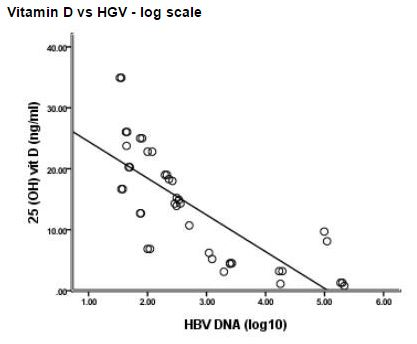
The relationship between 25OHD and HBV DNA (Log 10) levels in both chronic and occult HBV patients
>> DOI: http://dx.doi.org/10.20546/ijcmas.2016.507.075
May 18, 2016
Collaborating on Prevention
The group reached a consensus on the key evidence-based lifestyle advice that can be provided, particularly to relatives of people with MS in regards to reducing their risk:
- Don’t take up smoking or stop smoking;
- Ensure adequate blood levels of vitamin D in consultation with your health care providers;
- Avoid obesity, particularly in childhood and adolescence, through a healthy diet and an active lifestyle.
April 26, 2016
MS Society Prevention Workshop Report
Research into preventing MS is a high priority for people with MS. The MS Society Prevention Workshop brought together around 50 delegates from around the world to discuss the future of research into the prevention of MS.
>> MS Society Prevention Workshop Report
April 25, 2016
MS Experts Agree on Benefits of Vitamin D Supplements, Despite Mostly Circumstantial Evidence
Researchers concluded that, while evidence is only circumstantial as to the vitamin’s ability to prevent disease relapses, its multiple health benefits justify its recommended use by all.
>> MULTIPLE SCLEROSIS NEWS TODAY
March 30, 2016
Here's to the end of MS!
This week's newsletter presents a final round of information on vitamin D and MS, including an interview with Dr. Reinhold Vieth, a review of the SOLAR study, and an exciting announcement about the largest managed care organization in the US recommending more sun for better health!
>> GrassrootsHealth newsletter
March 23, 2016
A Personal Study on Vitamin D and MS
This newsletter presents another perspective on how a life with MS can be bettered with vitamin D by detailing a study conducted by a researcher on herself, after being diagnosed with MS.
>> GrassrootsHealth newsletter
March 16, 2016
What Does the Equator have to do with MS?
MS organizations are funding research, but it may not adequately represent vitamin D's potential. Our hope is that by this time next year we can report on a study, which will have been funded by a major MS organization, showing the efficacy of vitamin D and MS or a new standard of care to prevent MS - or as the National MS Society says - "a world free of MS."
>> GrassrootsHealth newsletter
March 9, 2016
Let's Hear from the MS Community!
Maybe you don't have MS. Maybe you have another condition. We would like to hear from you! This week we are presenting two success stories from the Coimbra Protocol. Both Brazilian women. Both with long-term success.
Book Review: Multiple Sclerosis and (lots of) Vitamin D
>> GrassrootsHealth newsletter
March 7, 2016
Vitamin D deficiency during pregnancy may increase risk of MS in children
Insufficient maternal 25(OH)D during pregnancy may increase the risk of MS in offspring.
>> more
March 2, 2016
Vitamin D3 Treatment Protocol May Put MS Patients in Remission
Vitamin D is great for prevention of disease, but what about treatment after you've been diagnosed? Since March is National Multiple Sclerosis month, now is the perfect time to bring it out into the light.The protocol we'll be highlighting in this newsletter was developed by Dr. Cicero Coimbra of Brazil.
>> GrassrootsHealth newsletter
December 30, 2015
Safety and immunologic effects of high- vs low-dose cholecalciferol in multiple sclerosis
Cholecalciferol supplementation with 10,400 IU daily is safe and tolerable in patients with MS and exhibits in vivo pleiotropic immunomodulatory effects in MS, which include reduction of interleukin-17 production by CD4+ T cells and decreased proportion of effector memory CD4+ T cells with concomitant increase in central memory CD4+ T cells and naive CD4+ T cells.
Classification of evidence: This study provides Class I evidence that cholecalciferol supplementation with 10,400 IU daily is safe and well-tolerated in patients with MS and exhibits in vivo pleiotropic immunomodulatory effects.
>> Neurology
December 17, 2015
Vitamin D protects against killing of neurons in culture and in EAE
The reduction of axonal and neuronal loss by 1,25D3 in the context of an inflammatory assault to the central nervous system is a potential contributor to the putative benefits of vitamin D in MS.
>> PubMed
December 7, 2015
Vitamin D for remyelination
Our data reveal a role for vitamin D in the regenerative component of demyelinating disease and identify a new target for remyelination medicines.
>> PubMed >> Comment >> MS Society
November 24, 2015
Vitamin D, Sunlight and MS
The role of vitamin D in MS risk – webinar with Professor Robyn Lucas
>> Webinar
October 31, 2015
Vitamin D May Protect the Brain in People at Risk for Developing MS
Vitamin D status may impact neurodegeneration after CIS, although these results should be replicated in a second study. If confirmed in clinical trials, vitamin D supplementation may reduce long-term disability.
>> PubMed >> Yale Daily News
October 16-17, 2015
Serum Vitamin D Status, a threat neither for hypercalcemia nor for inflammation
Vitamin D supplementation over a large range of intakes (1,000 - 15,000 IU/d) were found to be safe. Vitamin D intoxication with D3 supplement is a rare condition and hypercalcemia mediated by serum 25(OH)D remains a scarce presentation. Serum 25(OH) D might not be a threat for inflammatory cascade, however obesity was found to be a positive predictor for hypercalcemia and inflammation.
>> EVIDAS 2015
October 13, 2015
Vitamin D and axonal injury in multiple sclerosis
High 25(OH)D levels (at least 100 nmol/L) are associated with decreased axonal injury in MS.
>> PubMed
October 7-10, 2015
Vitamin D and the development and evolution of permanent black holes among patients with clinically isolated syndrome
Conclusions: Our results that higher levels of 25(OH)D were associated with lesser accumulation of irreversible brain tissue damage support the importance of adequate vitamin D status in delaying MS progression.
>> P799 ECTRIMS 2015
October 7-10, 2015
Low Vitamin D status is associated with early conversion to SPMS
These data indicate an association between a low vitamin D status at the start of RRMS and the early conversion to SPMS.
>> P1499 ECTRIMS 2015
October 7-10, 2015
Vitamin D and Epstein-Barr virus antibody levels in MS patients
Low serum 25(OH)D and Epstein-Barr virus (EBV) are known risk factors for multiple sclerosis (MS). EBV infection is associated with an increased risk of developing MS, and MS disease activity is associated with anti-EBV nuclear antigen 1 (EBNA-1) antibody levels. It has been shown that intrathecal production of anti-EBNA-1 by B-lymphocytes can be attenuated by stimulation with vitamin D. Due to seasonal variation in 25(OH)D levels, we hypothesize that there is a seasonal variation in EBNA-1 antibody production, associated with 25(OH)D levels.
Conclusion: There is a weak, but significant and persistent negative association between EBNA-1 antibody levels and 25(OH)D levels. The results indicate that 25(OH)D and EBNA-1 antibody levels are affected by a common, exogenous factor, or that the effect of vitamin D on MS disease may include modulation of anti-EBNA-1 antibody producing B-lymphocytes.
>> P397 ECTRIMS 2015
September 1, 2015
Become a GrassrootsHealth Certified D*practitioner
GrassrootsHealth is now offering two free, one-hour online CME video courses – presentations by Dr. Robert Heaney, MD, and Dr. Carol Wagner, MD. Following completion of each course, you will be given a link to provide your contact information so you can be listed on our website as a participating practitioner.
Practitioners wishing to be certified for the Protect Our Children NOW! project must complete the course presented by Dr. Carol Wagner to be listed on the website as a POC Certified D*practitioner.
>> Protect Our Children NOW!
August 25, 2015
Vitamin D and Risk of Multiple Sclerosis
Genetic findings support observational evidence that lower vitamin D levels are associated with increased risk of multiple sclerosis.
>> ScienceDaily
>> PubMed
August 15, 2015
Multiple sclerosis patients have a diminished serologic response to vitamin D supplementation compared to healthy controls
Patients with MS had a lower increase in 25(OH)D levels with supplementation, even after accounting for putative confounders.
>> PubMed
June 22, 2015
Sunlight and Vitamin D: Necessary for Public Health
Though some vitamin D comes from our diet (and more recently from supplements), we should not ignore the natural capacity that we possess to produce our own.
>> PubMed
>> Videos
May 28, 2015
Protect Our Children NOW!
Moving Research into Practice.
Learn more about the Protect Our Children NOW! project, how you can get involved, and what it means to you. Additional information can be found at Protect our Children NOW!
>> Video
May 17, 2015
The sun provides more health benefit than Vitamin D
Dr. Robyn Lucas, a medically trained epidemiologist and public health physician. She is a professor at ANU medical school and supervises an ever growing number of doctoral students, not to mention she has contributed to over 100 published studies.
>> Podcast
December 10, 2014
Design Components of Interventions/Studies of Vitamin D
Bruce W. Hollis, PhD, Medical University of South Carolina, identifies the key components that need to be adhered to in nutrient studies as well as how these components influence study outcomes. Robert P. Heaney, MD, Creighton University, examines the critical design features and standard frameworks for vitamin D studies.
>> Video
December 9, 2014
Vitamin D, Sunshine, Optimal Health: Putting it all Together
Robert P. Heaney, MD, Creighton University explores why vitamin D is important, how it works, how we get it and how much we need.
>> Video
November 26, 2014
The benefits of Vitamin D in treating MS
A/Prof Helmut Butzkueven from the University of Melbourne
>> Video
>> PrevANZ trial
October 20, 2014
Your defence against Ebola: Vitamin D
Donate a bottle of Vitamin D3.
>> Video
October 10, 2014
The Vitamin D to Ameliorate Multiple Sclerosis (VIDAMS) trial: study design for a multicenter, randomized, double-blind controlled trial of vitamin D in multiple sclerosis.
Bhargava P, Cassard S, Steele SU, Azevedo C, Pelletier D, Sugar EA, Waubant E, Mowry EM
Contemp Clin Trials. 2014 Oct 10. Epub 1969 Dec 31. PMID: 25311447.
>> PubMed >> NCT01490502
October 9, 2014
The molecular mechanism of Vitamin D's role in MS
Chicken or egg? The study (Munger et al., 2014) shows that MS disease activity on IFN-beta is linked to low vD levels and suggest the mechanism is via complex network of gene regulation.
>> more
October 2, 2014
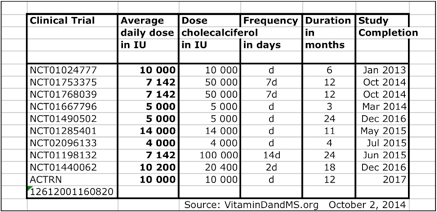
Overview of Clinical Trials with Vitamin D3 for patients with Multiple Sclerosis
Clinical Trial NCT Number, Average daily dose in IU, Dose of Cholecalciferol in IU, Dose Frequency, Duration of the trial in months, Date of Study Completion.
After the completion of a Clinical Trial it will take several months before the paper is published.
September 3, 2014
Calcitriol, Vitamin D3, and Multiple Sclerosis
Dr. Colleen E. Hayes, Ph.D., Professor of Biochemistry, University of Wisconsin, Madison, WI
Colleen has started exploring one calcitriol dose plus supplementary vitamin D3 treatment in MS. This research summary provides information to aid translational research efforts.
>> PDF (166 KB)
August 27, 2014
Is Daily Dosing important? YES
Dr. Bruce Hollis - Vitamin D Dosing Interval
"Please apply this information to your health - and share with a friend. The more people talking about the benefits of vitamin D and, potentially, the need for daily dosing - the faster we will move science into practice."
Carole Baggerly, GrassrootsHealth
>> YouTube
June 5, 2014
Vitamin D3 News for Multiple Sclerosis Patients, June 5, 2014
Dr. Colleen E. Hayes, Ph.D., Professor of Biochemistry, University of Wisconsin, Madison, WI
>> PDF (154 KB)
April 24, 2014
Vitamin D in 5 minutes
Vitamin D: Does Less Sun Mean More Disease?
Around 9 out of 10 people you know are deficient in vitamin D, which we get from the sun. Find out why, what that does to you, and what you can do about it, right now by watching this short, stunning animation.
>> more
April 24, 2014
Vitamin D and human health
The main reason for me (Gavin Giovannoni, neurologist) recommending vD supplements is for other potential health reasons, in particular bone health. I see little reason to justify leaving MSers in a vD deficient state (while waiting for more evidence). This is why I recommend vD supplementation with the aim of keeping levels above 100nmol/L or 40ng/ml all year round.
>> more
March 21, 2014
Vitamin D3 News for Multiple Sclerosis Patients, March 2014
Dr. Colleen E. Hayes, Ph.D., Professor of Biochemistry, University of Wisconsin-Madison
>> PDF (152 KB)
March 10, 2014
Vitamin D – could it stop 'modern’ diseases?
By Oliver Gillie
>> The Telegraph
February, 2014
Guidelines
Supplementation and therapeutic use of vitamin D in patients with multiple sclerosis: Consensus of the Scientific Department of Neuroimmunology of the Brazilian Academy of Neurology
Brum DG et al, 2014
>> PubMed >> Free full text
Januari 20, 2014
Vitamin D as an Early Predictor of MS Activity and Progression
Among patients with MS mainly treated with interferon beta-1b, low 25(OH)D levels early in the disease course are a strong risk factor for long-term MS activity and progression.
>> PubMed >> harvard >> medpageTODAY >> Multiple Sclerosis Research
>> MS Discovery Forum >> ScienceDaily
December 6, 2013
Can we prevent MS?
Professor Gavin Giovannoni, Professor of Clinical Neurology & Chair of Neurology, Blizard Institute, Barts and The London School of Medicine and Dentistry, London
>> more
December 5, 2013
Vitamin D3 News for Multiple Sclerosis Patients, December 2013
Dr. Colleen E. Hayes, Ph.D., Professor of Biochemistry, University of Wisconsin-Madison
>> PDF (106 KB)
October 8, 2013
Why clinical dose intervals can affect clinical outcomes
It appears likely that for the optimal benefits of vitamin D supplementation, enough vitamin D should be provided on a daily basis to ensure that stable circulating concentrations are maintained over time.
>> PubMed
October 4, 2013
Vitamin D for All to Prevent MS?
George Ebers, MD, University of Oxford, United Kingdom (UK), at ECTRIMS said, "When looking at the risks, costs and benefit equation, the risks of universal supplementation with vitamin D to reduce the risk for multiple sclerosis (MS) seem tiny, and the benefits are yet to be established but indirect studies are supportive. The cost of vitamin D is dirt cheap but the costs of MS are staggering and are increasing."
>> more
October 4, 2013
Vitamin D Benefit in MS: Molecular, Genetic Evidence
Alberto Ascherio, MD, Harvard Medical School, Boston, Massachusetts, at ECTRIMS: Higher mean serum vitamin D levels early in the course of multiple sclerosis (MS) robustly predicted a lower degree of disease activity, MRI lesion load, brain atrophy, and clinical progression over 5 years of follow-up, according to new data from the BENEFIT study.
>> more
August 16, 2013
One calcitriol dose transiently increases Helios+FoxP3+ T cells and ameliorates autoimmune demyelinating disease.
The clever combination of a single dose of calcitriol, the active vitamin D hormone, followed by daily vitamin D3 supplements suppresses inflammation in the CNS of mice and suggest it has potential as an MS therapy. The next step is human clinical trials.
>> PubMed >> more
July 4, 2013
Vitamin D supplementation and antibodies against the Epstein-Barr virus in multiple sclerosis patients.
This study found that the initial antibody levels against EBV (EBNA1) (mean=77.98, SD=37.16) were significantly reduced after supplementation with vitamin D3 20,000 IU/day for 12 weeks.
A remarkable study which shows that vitamin D influences the production of antibodies against the Epstein Bar Virus. Epstein–Barr virus (EBV) is thought to cause multiple sclerosis (MS).
>> PubMed
June 13, 2013
Higher levels of reported sun exposure, and not vitamin D status, are associated with less depressive symptoms and fatigue in multiple sclerosis
This study found that higher levels reported sun exposure, rather than 25(OH)D levels, were associated with less depressive symptoms and levels of fatigue. The role of UV or light therapy will need to be evaluated in randomized controlled trials to confirm an effect on these symptoms in MS.
>> PubMed
June 5, 2013
Suppression of experimental autoimmune encephalomyelitis by 300-315nm ultraviolet light
The results demonstrate that NB-UVB (300-315nm) is largely responsible for light-induced suppression of EAE and its effect is not via production of vitamin D.
>> PubMed
May 31, 2013
Cholecalciferol (Vitamin D3) Improves Myelination and Recovery after Nerve Injury
This study demonstrate that vitamin D acts on peripheral nerve repair and myelination via the activation of several myelin-associated genes.
>> PubMed
May 22, 2013
The effect of vitamin D-related interventions on multiple sclerosis relapses: a meta-analysis
In conclusion, although no significant association between high-dose vitamin D treatment and risk of MS relapses was found, the studies were limited by several methodological limitations. Further larger, more prolonged studies are merited.
>> more
May 7, 2013
The influence of vitamin D supplementation on melatonin status in patients with multiple sclerosis
Melatonin secretion is negatively correlated with alterations in serum 25-OH-D in IFN-β treated patients with MS. The finding suggests that melatonin should be considered as a potential mediator of vitamin D neuro-immunomodulatory effects in patients with MS.
>> more
March 20, 2013
Contribution of vitamin D insufficiency to the pathogenesis of multiple sclerosis
Patients with MS who are vitamin D deficient should be supplemented...
>> PubMed >> Free PMC Article
March 20, 2013
Potential Immune Benefits of Strong Vitamin D Status in Healthy Individuals
Research shows that improving vitamin D status by increasing its level in the blood could have a number of non-skeletal health benefits. The study reveals for the first time that improvement in the ...
>> more
March 1, 2013
Oxford Neurologist Awarded Dystel Prize for MS Research
George C. Ebers, MD, a leading researcher with the University of Oxford and Oxford University Hospitals Trust in Oxford, United Kingdom has focused his research on genetic and environmental influences on MS risk.
>> more
February 23, 2013
Is a vitamin D deficit a cause or an effect of MS?
Barts and UCLP Research Day Question Time Question #5.
>> more
February 6, 2013
Yes, if I had clinically isolated syndrome with magnetic resonance imaging diagnostic of multiple sclerosis, I would take vitamin D 10,000 IU daily
Strong epidemiologic evidence supports a role for vitamin D insufficiency as a risk factor for multiple sclerosis (MS), shown by increasing disease prevalence with increasing latitude, and inverse correlation with duration and intensity of ultraviolet B (UVB) sunlight exposure and vitamin D serum concentration.
>> more
February 6, 2013
No, if I had a clinically isolated syndrome with MRI diagnostic of MS, I would not take vitamin D 10,000 IU daily
We believe that conclusive demonstration of the efficacy in MS is still missing, and that the links between 25OH vitamin D intake, vitamin D status, and neurologic outcome remain hypothetical.
>> more
February 6, 2013
Commentary, if I had CIS with MRI diagnostic of MS, I would take vitamin D 10,000 IU daily
If the debate question was framed as “Would I prescribe vitamin D 10,000 units to a patient with clinically isolated syndrome and an abnormal MRI scan?”, then the answer is, of course, “No”. I agree with the antagonists in this debate that phase 3 trial data are needed before using vitamin D as a therapeutic agent. However, those trial data will take at least another 2-3 years to collect. Thus, while waiting for that proof, if I, or my children, developed a clinically isolated syndrome with an abnormal MRI scan, then I would have no hesitation in prescribing vitamin D in that dose for them.
>> more
December 19, 2012
Preventive effect of vitamin D3 supplementation
50,000 IU of vitamin D3 weekly for 12 months may delay the onset of a second clinical attack and the subsequent conversion to MS.
>> more
November 19, 2012
Multiple Sclerosis Linked to Vitamin D Levels, Study Says
People with high levels of vitamin D in their blood have shown a lower risk of developing multiple sclerosis, according to results of a Swedish study released Monday.
>> more
November 15, 2012
Are you pregnant or planning to fall pregnant?
Professor Gavin Giovannoni:
"If you are pregnant or planning to fall pregnant you need to make sure you are vitamin D replete. This may lower the chances of your child getting MS and other autoimmune diseases. My recommendation for pregnancy is 10,000U vD3 per day; this is double my recommendation of 5,000U per day for adults."
>> more
November 14, 2012
Month of Birth Effect: Give Pregnant Women Vitamin D Supplements to Ward Off Multiple Sclerosis, Say Researchers
The risk of developing multiple sclerosis is highest in the month of April, and lowest in October, indicates an analysis of the available evidence, published online in the Journal of Neurology ...
>> more
October 19, 2012
Effect of high-dose vitamin D3 intake on ambulation, muscular pain and bone mineral density in a woman with multiple sclerosis: a 10-year longitudinal case report
Since January 2001, a vitamin D3 supplement was ingested daily. The starting dose was 20 mcg (800 IU)/day and escalated to 100 mcg (4000 IU)/day in September 2004 and then to 150 mcg (6000 IU)/day in December 2005. Vitamin D3 intake reduced muscular pain and improved ambulation from 1 (February 2000) to 14 km/day (February 2008).
>> more
October 17, 2012
Prevention of MS
Through rigorous epidemiological investigation, Epstein-Barr virus infection, vitamin D nutrition and cigarette smoking have been identified as likely causal factors in MS.
>> more
October 16, 2012
Australia rolls out world first MS prevention trial
One of the most important developments in the prevention of multiple sclerosis (MS) is a world first clinical trial set to take place in Australia and New Zealand. It will test whether vitamin D can prevent MS in those at risk of developing the disease.
>> more
PrevANZ – vitamin D MS prevention trial FAQ PDF (152 KB)

October 13, 2012
Shedding some light on vitamin D and MS - ECTRIMS 2012
We all know that having proper levels of vitamin D is important to our overall general health. But scientists are continuing to gain more understanding about the link between vitamin D levels and what it means to people living with MS.
>> YouTube
October 10-13, 2012
28th Congress of the European Committee for Treatment and Research in Multiple Sclerosis (ECTRIMS)
Search Results: Abstracts Vitamin D
>> more
October 3, 2012
Low vitamin D levels linked to more severe multiple sclerosis symptoms
Low blood levels of vitamin D are associated with an increased number of brain lesions and signs of a more active disease state in people with multiple sclerosis (MS), a new study finds, suggesting a potential link between intake of the vitamin and the risk of longer-term disability from the autoimmune disorder.
>> more
August 30, 2012
Prenatal Vitamin D Deficiency Induces an Early and More Severe Experimental Autoimmune Encephalomyelitis in the Second Generation
The vitamin D deficiency affecting the F0 pregnant mice induced a precocious and more severe EAE in the F2 generation. In MS patients a trend for a reduced number of births in the Fall for their parents was observed but statistical significance was not reached. Further well powered studies are warranted to validate the latter finding.
>> PDF (494 KB)
July 26, 2012
Vitamin D and MS, Q&A with Dr. Collene Hayes
Dr. Colleen E. Hayes, Ph.D., Professor of Biochemistry, University of Wisconsin-Madison about "Solving the Multiple Sclerosis Problem: A Role for Vitamin D".
>> YouTube
July 25, 2012
Vitamin D may reduce the risk of dominantly inherited Alzheimer’s disease
Higher serum 25(OH)D concentrations may reduce the risk of Alzheimer’s disease. Based on results from other studies, serum 25-hydroxyvitamin D concentrations should be above 40 ng/ml (100 nmol/l) for optimal health.
>> more
July 17, 2012
Interferon-beta increases vitamin D levels from sun exposure
Bruce Taylor highlighted the fact that all those patients who were given Interferon-beta were far more efficient in producing vitamin D in their skin. They had nearly three times more vitamin D than those who were not on the treatment.
>> more
July 13, 2012
Relationship between 25OHD serum level and relapse rate in multiple sclerosis patients before and after vitamin D supplementation
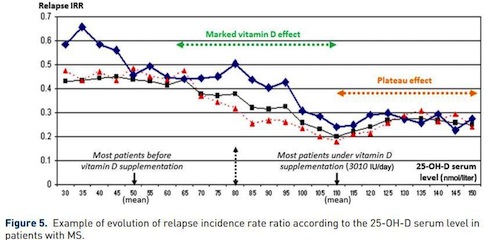
A study in which 156 RRMS patients were supplemented for 2,5 years with a moderate vitamin D dose (3000 IU/day) has reported a marked reduction of relapses (more than 50%). The vitamin D3 supplementation increasing vitamin D serum levels, up to 110 nmol/L (44 ng/ml), with a plateau effect beyond this level. Suggesting, therefore, that it is particularly useful to correct vitamin D deficiency in MS patients when present. Vitamin D deficiency (< 100 nmol/L) is present in 90% of the MS patients. Furthermore, because of the plateau effect beyond 110-120 nmol/L, it may not be necessary to prescribe high, not physiological vitamin D doses (beyond 4000 IU/day).
>> more
July 5, 2012
Higher Doses of Vitamin D - 800 IU and 2000 IU - per day Are Effective in Fracture Risk Reduction in Older Adults, Study Suggests
Based on the results of a pooled analysis of 11 unrelated randomized clinical trials investigating vitamin D supplementation and fracture risk in more than 31,000 older adults, scientists say higher...
>> more
June 13, 2012
Vitamin D in MS A vitamin for 4 seasons
The results of 3 independent studies published in Neurology® suggest that higher levels of circulating 25-hydroxyvitaminD (25OHD) may reduce relapses and lesions on MRI in persons with multiple sclerosis (MS). It is too soon to recommend the use of high-dose vitamin D in clinical practice. Meanwhile, considering the high prevalence of vitamin D insufficiency and deficiency in persons with MS, the high risk of osteoporosis, and the safety of vitamin D at modest doses, the evidence is sufficient to recommend monitoring of vitamin D levels and supplementation as needed to achieve at least a year-round level of vitamin D sufficiency in persons with MS.
>> more
June 13, 2012
Lower serum vitamin D levels are associated with a higher relapse risk in multiple sclerosis
Our finding that higher vitamin D levels are associated with decreased exacerbation risk in relapsing-remitting MS suggests a beneficial effect of vitamin D on disease course in MS. However, the possibility of reverse causality cannot be ruled out completely. Randomized intervention studies are therefore needed to investigate the effect of vitamin D supplementation in MS.
>> more
June 13, 2012
Interferon-β and serum 25-hydroxyvitamin D interact to modulate relapse risk in MS
In this study, we found that IFN-β therapy is associated with greater production of vitamin D from sun exposure, suggesting part of the therapeutic effects of IFN-β on relapse in MS may be through modulation of vitamin D metabolism. These findings suggest persons being treated with IFN-β should have vitamin D status monitored and maintained in the sufficiency range.
>> more
June 13, 2012
Vitamin D and disease activity in multiple sclerosis before and during interferon-β treatment
Increasing levels of 25-hydroxyvitamin D are inversely associated with a significant and consistent reduction of active lesions on MRI in untreated patients with MS. A randomized controlled trial sufficiently powered to capture moderate, but still potentially important effects, is needed to prove a causal relationship between vitamin D levels and disease activity in MS.
>> more
June 11, 2012
ENS Congress: High level of vitamin D reduces risk of multiple sclerosis
European Neurological Society 2012: 3,000 neurologists meet in Prague. Oral administration of vitamin D is recommended for individuals with a vitamin D deficiency and for those who already have MS.
>> more
April 19, 2012
MS Trial Alert: Trial of Vitamin D Supplementation Recruiting People with Relapsing-Remitting MS
Investigators at several centers in the USA are recruiting 172 people with relapsing-remitting MS to compare the effectiveness of the current recommended amount of vitamin D supplementation versus high dose vitamin D supplementation at reducing MS disease activity, when added to standard therapy with glatiramer acetate (Copaxone®, Teva Pharmaceutical Industries).
>> more
April 18, 2012
Common Virus Plus Low Sunlight Exposure May Increase Risk of Multiple Sclerosis
New research suggests that people who are exposed to low levels of sunlight coupled with a history of having a common virus known as mononucleosis may be at greater odds of developing multiple sclerosis (MS) than those without the virus.
>> more
March 20, 2012
Vitamin D status predicts new brain MRI activity in multiple sclerosis
Mowry EM et al. – Vitamin D levels are inversely associated with multiple sclerosis (MS) activity on brain MRI. These results provide further support for a randomized trial of vitamin D supplementation.
>> more
March 19, 2012
Human skin pigmentation, migration, and disease susceptibility
Human skin pigmentation evolved as a compromise between the conflicting physiological demands of protection against the deleterious effects of ultraviolet radiation (UVR) and photosynthesis of UVB-dependent vitamin D3.
>> more >> audio supplement
>> TED TALKS: Nina Jablonski breaks the illusion of skin color
March 10, 2012
Vitamin D News for Multiple Sclerosis Patients, March 2012
Dr. Colleen E. Hayes, Ph.D., Professor of Biochemistry, University of Wisconsin-Madison
>> PDF (160 KB)
February 26, 2012
Vitamin D prevention trial for MS will commence in 2012
The PrevANZ vitamin D clinical trial for prevention of MS is the world first prevention trial for MS. It is set to begin in Australia, using Vitamin D to prevent repeat attacks of Multiple Sclerosis. The PrevANZ trial will test 3 dosage levels of daily vitamin D supplements (1000, 5000 & 10,000 International Units) against placebo (dummy tablets).
>> more >> YouTube
February 22, 2012
Vitamin D Could Be Weapon Against MS
A clinical trial will test whether Vitamin D can help fight multiple sclerosis (MS). If successful, researchers say the trial could open the door to a treatment which is 100 times cheaper than other drugs available.
>> more
February 22, 2012
A randomised, double blind, placebo controlled trial with vitamin D3 as an add on treatment to interferon β-1b in patients with multiple sclerosis
One year supplementation with 20,000 IU vitamin D(3) weekly and no calcium daily raised the mean serum 25-hydroxy vitamin D (25[OH]D) from 54 to 110 nmol/L. 84% of patients reached a serum 25(OH)D level > 85 nmol/L in the vitamin D group and 3% in the placebo group. Patients in the vitamin D group showed fewer new brain lesions. Vitamin D3 add on treatment to IFNB reduces MRI disease activity in MS.
>> more
February 21, 2012
Effect of vitamin D3 supplementation on relapses, disease progression and measures of function in persons with multiple sclerosis: exploratory outcomes from a double-blind randomised controlled trial
Two year supplementation with 20,000 IU vitamin D(3) weekly and 500 mg calcium daily raised median serum 25-hydroxy vitamin D (25[OH]D) to 121 nmol/L. Unfortunately, the sample size was too small to result in beneficial effects on the measured multiple sclerosis-related outcomes.
>> more
February 2, 2012
Dangers of vitamin D deficiency highlighted
Following fresh concerns about vitamin D deficiency, the UK’s 4 Chief Medical Officers have written to health professionals reminding them about this issue.
>> more
January 27, 2012
England's chief medical officer Dame Sally Davies backs (free) vitamin D supplements
England's chief medical officer Dame Sally Davies has begun campaigning to the English medical fraternity that certain population groups like under-5s should take vitamin D supplements.
>> more
January 17, 2012
National MS Society Convenes Summit to Explore Vitamin D Trials to Prevent MS
An International Workshop “Vitamin D and MS Prevention" discussed the latest findings relevant to vitamin D and MS and potential clinical trial designs, taking the first steps to making these exciting studies a reality.
>> more
December 20, 2011
Vitamin D in food call to combat Scots MS
Prof George Ebers, a University of Oxford professor, has said rates of multiple sclerosis are so dire in Scotland essential foodstuffs should be fortified with vitamin D.
>> more
December 13, 2011
From the Frontlines: What’s New in MS Research for 2012
Researchers have just finished an exciting summit asking the question, can we prevent MS with Vitamin D?
>> watch the recording >> read the transcript
December 8, 2011
Rare Gene Links Vitamin D and Multiple Sclerosis
Prof George Ebers, lead study author at Oxford University, says "This type of finding has not been seen in any complex disease. The uniform transmission of a variant to offspring with MS is without precedent but there will have been interaction with other factors."
>> more
October 19 - 22, 2011
Breaking News from ECTRIMS/actrims: Zeroing in on risk factors for MS
Research has now shown that Vitamin D3 (Cholecalciferol) can, not only prevent MS, but also can reduce MS-attacks, MS-lesions in the Brain as seen on the MRI and also reduce the progression of MS. Thus Vitamin D3 may even prevent the wheel chair. These findings have to be re-established in larger clinical trials.
>> more
Augustus 23 , 2011
Vitamin D Found to Influence Over 200 Genes, Highlighting Links to Disease
The extent to which vitamin D deficiency may increase susceptibility to a wide range of diseases is dramatically highlighted in newly published research. Scientists have mapped the points at which
>> more
Augustus 10 , 2011
Global Consortium Doubles the Number of MS Risk Genes Identified
Two genes linked to vitamin D were also implicated; research is increasingly pointing to low vitamin D levels in patients as a risk factor for developing MS.
>> more
July 11 , 2011
Poor Bone Health May Start Early in People With Multiple Sclerosis
Osteoporosis and low bone density are common in people in the early stages of multiple sclerosis (MS), according to a new
>> more
May 22 , 2011
Epstein-Barr Virus Could Be Risk Factor for Multiple Sclerosis
While there is no cause known for multiple sclerosis, patients with MS seem to have genetic vulnerability to certain environmental factors that could trigger this condition, such as the Epstein-Barr
>> more
April 19 , 2011
Common Virus Plus Low Sunlight Exposure May Increase Risk of Multiple Sclerosis
New research suggests that people who are exposed to low levels of sunlight coupled with a history of having a common virus known as mononucleosis may be at greater odds of developing multiple sclerosis.
>> more
April 12 , 2011
Gestational ultraviolet and vitamin D exposure and the risk of multiple sclerosis in the United Kingdom
One of the most enigmatic features of the complex disease multiple sclerosis (MS) is the observation that season of birth influences the risk of developing the disease later in life being higher in spring born and lower in fall born individuals.
>> more
March 3 , 2011
How Sunlight May Reduce the Severity of Multiple Sclerosis
New research into the neurodegenerative disease, multiple sclerosis (MS) offers new insight into the link between sunlight, vitamin D3, and MS risk and severity. The research studies the relationship
>> more
February 7, 2011
Sun Exposure, Vitamin D May Lower Risk of Multiple Sclerosis
People who spend more time in the sun and those with higher vitamin D levels may be less likely to develop multiple sclerosis, according to a new study. MS is a chronic disease of the brain and
>> more
December 2 - 4, 2010
Vitamin D: A Health/Disease Switch in MS
There is mounting evidence that alterations in the gastro-intestinal microbiota (due to lifestyle changes) have disrupted microbial-mediated mechanisms of immunological tolerance within and outside the gut and can affect various immunologic diseases in humans.
>> more
October 15, 2010
Vitamin D News for Multiple Sclerosis Patients, October 2010
Dr. Colleen E. Hayes, Ph.D., Professor of Biochemistry, University of Wisconsin-Madison
>> PDF (101 KB)
May 22, 2010
Vitamin D News for Multiple Sclerosis Patients, May 2010
Dr. Colleen E. Hayes, Ph.D., Professor of Biochemistry, University of Wisconsin-Madison
>> PDF (98 KB)
April 10 - 17, 2010
Abstracts/talks on vitamin D and MS at the 62nd Annual Meeting of the American Academy of Neurology (AAN)
>> more
March 8, 2010
Vitamin D Crucial to Activating Immune Defenses
Scientists have found that vitamin D is crucial to activating our immune defenses and that without sufficient intake of the vitamin - the killer cells of the immune system -- T cells -- will not be
>> more
October 23, 2009
Why governments are selling Vitamin D short
Dr. Vieth and other vitamin D researchers around the world believe they can prove vitamin D could help millions live longer and be healthier and yet they have not been able to convince their own governments.
>> more
February 06, 2009
Study Shows Link Between Vitamin D and an MS Susceptibility Gene
For the first time, researchers have found evidence of a direct interaction between vitamin D and a common genetic variant, the presence of which increases the risk of developing multiple sclerosis. The research highlights the importance of studying the interaction of genes and the environment to search for the underlying triggers of this complex disease.
>> more
January 27, 2009
Study Linking Vitamin D to a Reduction in Cancer Risk
A total of 2,300 women will be recruited and followed for four years with half of the participants randomly assigned to take daily supplements containing 2,000 IU of vitamin D3 and 1,200 mg of calcium; the second group will receive placebos.
>> more
January 7, 2009
25-hydroxyvitamin D levels and the risk of mortality in the general population
In the study, people who had low vitamin D levels, 17.8 ng/mL (44.5 nmol/L) or lower, were 26 percent more likely to be dead at the end of the study than those with higher vitamin D levels.
>> more
January 1, 2009
An International Effort to Solve the Vitamin D Deficiency Epidemic
Sign up to participate in this study and get your vitamin D tested with a blood spot test from ZRT.
>> more
FaceBook Closed group Vitamin D and MS
Page last edited: June 12, 2016
Terms of Use